



First walk with the baby: When can you go out?
The short answer: With a healthy, full-term baby, you can generally go for a short walk as soon as you as parents feel physically and organizationally ready. There is no fixed waiting period for all families. It is better to start slowly, stay close to your home at first, and observe whether your baby is breathing comfortably, has a pleasant body temperature, and is behaving as usual. In the event of a premature birth, low birth weight, illness, or individual recommendations from the hospital, ask your midwife, pediatrician, or GP before the first outing.
The first walk with a newborn is not a test of endurance. Some parents want to get out into the fresh air for a few minutes shortly after returning home, while others need rest during the postpartum period. Both are completely understandable. What matters is not a specific day or as long a distance as possible, but a suitable time for the baby and the accompanying person.
| Situation | Practical next step | What to look out for? |
|---|---|---|
| Healthy, full-term baby | Short, quiet walk near your home | Feed, change the baby, and check the weather beforehand |
| Parent still very exhausted | Wait or take someone with you | Respect the postpartum period and your own recovery |
| Premature birth, low birth weight, or illness | Obtain individual clearance | Ask the hospital, midwife, or pediatrician |
| Heat or strong sun | Choose a cooler time of day and stay in the shade | Never cover the stroller with a blanket or cloth |
| Cool, windy day | Short walk and light layers | Remove additional clothing inside |
When can a newborn go out for the first time?
For healthy newborns, no general multi-day waiting period can be derived from reliable recommendations. The British National Health Service (NHS) lists going out with a stroller or baby carrier as a normal way to soothe a baby. In practical terms, this means: if your baby is stable and the person who gave birth feels well enough, a short walk can be a sensible start.
The individual situation is more important than the date on the calendar. After a caesarean section, birth injuries, circulatory problems, or a traumatic birth, the walk may initially need to be very short. Even spending time on the balcony, patio, or outside the front door can feel like a first outing. Get support if you feel unsure.
How long should the first walk last?
There is no medical rule about minutes that applies to every baby. As a practical idea, you can start with about ten to twenty minutes and choose a route that can be shortened at any time. This is not a requirement, but a relaxed starting point. If the baby and the accompanying person feel comfortable, the next walk can be longer.
Do not plan any fixed appointments outdoors at the beginning. A short walk without shopping, a café visit, or pressure from visitors is easier to cut short. Feeding, changing the baby, and taking a short break before leaving take time and remove time pressure from the situation.
How do I dress my baby properly outdoors?
As a general guideline, the NHS recommends wearing one light layer more than adults do in cool weather. This is a starting point, not a rigid formula. Wind, moisture, strollers, baby carriers, footmuffs, and blankets all change the baby's heat requirements.
It is better to check the baby's tummy or upper back than their hands and feet. Cool hands can be normal in small babies. If the baby is sweating or their tummy feels noticeably hot, remove a layer. Hats and additional clothing should be removed again in warm indoor spaces, in the car, bus, or train. The NHS points out that small babies cannot yet reliably regulate their temperature.
Key takeaway for when you're out
Several light layers are easier to adjust than one very thick layer. The face and airways should always remain uncovered. Check your baby regularly instead of relying solely on a weather app or cold hands.
Sun and heat
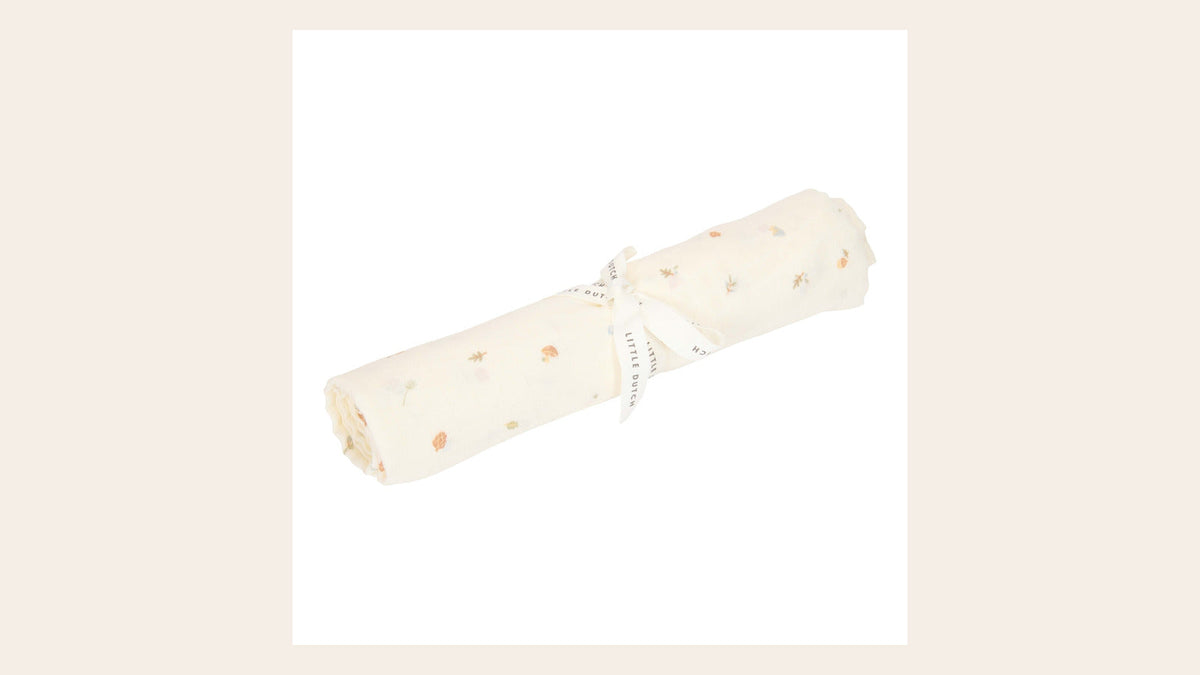
According to the NHS, babies under six months should not be exposed to direct sunlight. Use the stroller's built-in sun protection and stay in the shade as much as possible. Never place a muslin cloth or blanket over the entire stroller opening: the air underneath can heat up. That is exactly why a cloth in the diaper bag is practical, but not a substitute for a ventilated sunshade.
Cold and wind
In cool weather, light layers, dry clothing, and a sheltered route help. A suitable blanket or compatible footmuff can be useful. However, make sure the face remains uncovered and that the footmuff does not lead to too many thick layers of clothing.
Stroller or baby carrier?
Both can work for the first walk. A newborn can lie flat in a shallow stroller bassinet. Before you set off, check the brakes, straps, mattress, and canopy. Loose pillows, stuffed animals, and heavy blankets should not be placed near the face or in the breathing area.
With a baby carrier or baby wrap, clear airways are particularly important: the face must be visible, the nose must remain clear, and the chin must not sink into the chest. The NHS points out that premature babies, babies with low birth weight, ill babies, and very young infants must be positioned particularly carefully in carriers. Ask a midwife or babywearing consultant to show you how to use it if needed.
A baby seat is designed for safe car travel. It is not a substitute for a shallow stroller bassinet for a longer walk. Remove the baby from the seat as soon as you reach your destination.
What should I take on the first walk?
- a diaper, wipes or washcloth, and a foldable changing mat
- a spit-up cloth or muslin cloth for minor mishaps
- a light blanket suitable for the weather or a compatible footmuff
- a spare layer of clothing if the weather is changeable
- for bottle-fed babies, only the usual, safely prepared meal
- mobile phone, keys, and something to drink for the accompanying person
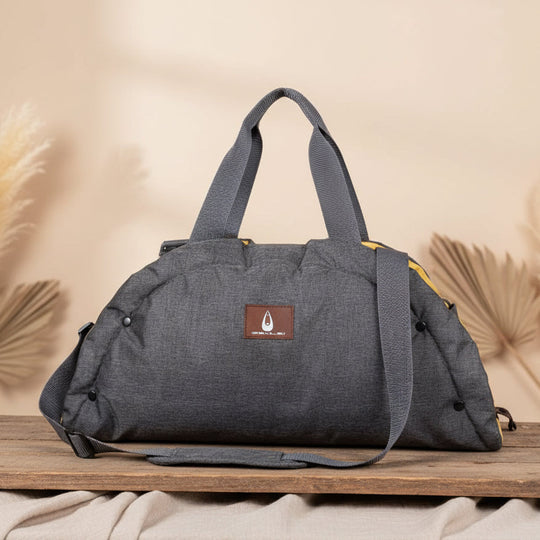
For a short walk around the block, you do not need a fully packed travel bag. A few easily accessible items are more useful than a lot of extra weight.
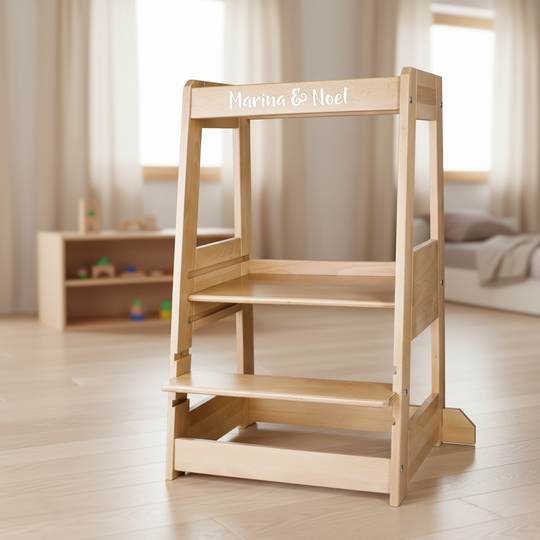
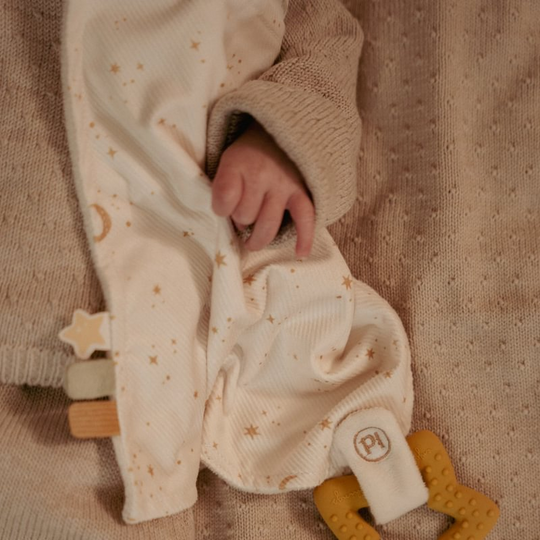
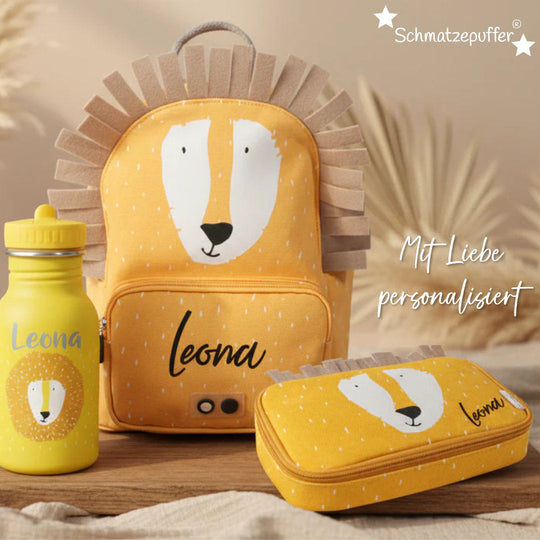
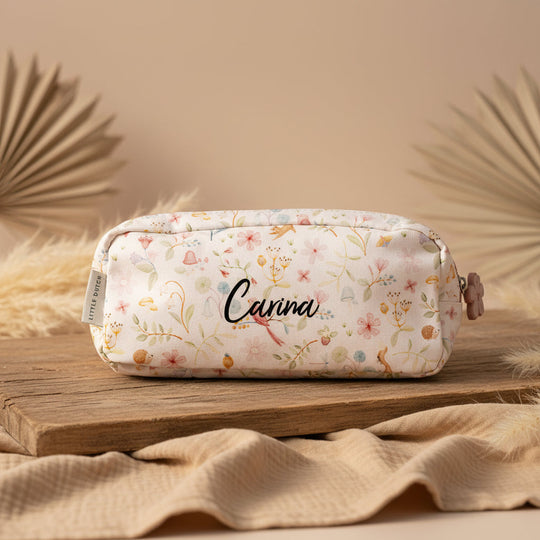
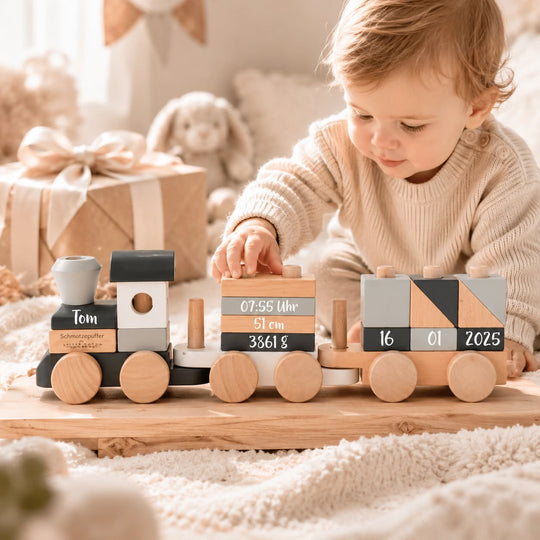
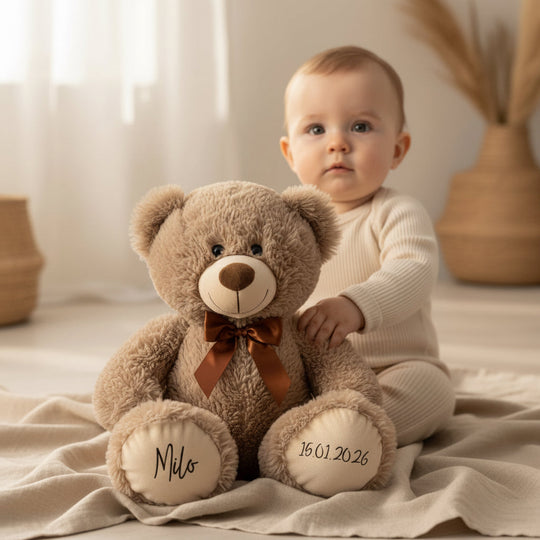
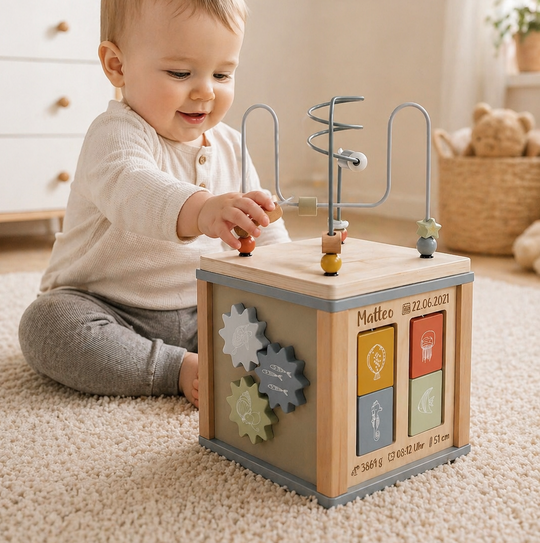
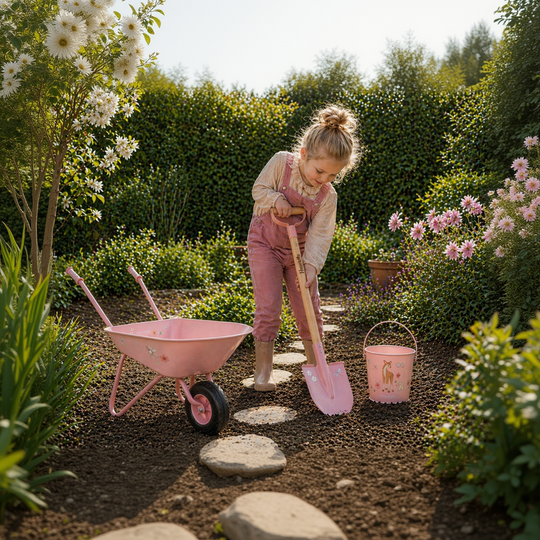
Five practical companions from the Schmatzepuffer shop
The following products are not a requirement for a walk. They solve different everyday tasks and were available during our review.


Typical mistakes on the first outing
- Too much at once: A long visit with travel is different from a short walk outside the front door.
- Completely covering the stroller: Blankets and muslin cloths can impair air circulation and trap heat.
- Only checking hands and feet: They often feel cooler. The tummy or upper back provide a better indication.
- Leaving thick clothing on in warm rooms: Remove additional layers and hats indoors.
- Ignoring pain or exhaustion: The health of the person who gave birth also determines when and how far the walk goes.
If you would like to coordinate the equipment further, our guides on Baby Blanket Sizes and Materials, Muslin Cloth Sizes, and the Suitable Footmuff for Strollers or Baby Seats are also helpful.
Conclusion: start small, stay flexible
The first walk can be short, unspectacular, and cut short at any time. For a healthy newborn and a fit parent, no special appointment is usually necessary. A quiet route, suitable light clothing, clear airways, and regular temperature checks are more important than a perfectly packed diaper bag. In the event of a premature birth, illness, or uncertainty, the individual recommendation of your treatment team always applies.
Frequently Asked Questions
Do I have to wait several days after birth?
For healthy, full-term babies, there is no general fixed waiting period. What matters are the baby's condition, the well-being of the accompanying person, and individual guidance from the hospital or practice.
Are ten to twenty minutes mandatory?
No. This time span is only a practical idea for a cautious start. Some families go for shorter periods, others for longer. What matters is that you can turn back at any time.
How do I recognize if my baby is dressed too warmly?
Sweating or a noticeably hot tummy or upper back indicates that a layer should be removed. Cool hands alone do not automatically mean that the baby is cold.
Can I darken the stroller with a muslin cloth?
No. The NHS warns against covering strollers with a cloth or blanket because heat can build up. Use a suitable, ventilated sunshade or a parasol.
Does my baby always need a hat outdoors?
This depends on the weather, wind, sun protection, and clothing. In warm indoor spaces and vehicles, hats and additional layers are removed again.
Is a baby carrier suitable for the first walk?
Yes, if it is properly adjusted and the airways remain clear. The face and nose must be visible, and the chin must not sink into the chest. In the event of a premature birth or low birth weight, seek professional advice beforehand.
When should I rather stay at home?
If the baby or accompanying person appears ill, the baby is noticeably drinking poorly, shows breathing problems, or you have medical concerns, clarify the situation first with a midwife, pediatrician's office, or medical on-call service.
Professional sources and note
This is based on information from NHS Best Start in Life, the NHS page on Dressing Newborns, the NHS Sun Safety Guidance, and the professional information on Baby Carriers, Prams and Car Seats.
This guide is not a substitute for individual medical advice. In the event of premature birth, illness, unusual behaviour or uncertainty, contact a midwife, paediatrician or GP.
