A changing area without a changing table can be set up with a suitable mat, diapers within easy reach, and an organized storage solution. The key is where you actually want to change your baby: A foldable mat is ideal for changing locations, while a padded mat is better suited to a permanent spot. The German Robert Koch Institute calls the floor the safest option because the baby cannot fall from it. You should try this out before buying to see whether it works well for your back and your living situation.
Perhaps the bedroom is small, or you do not want to buy an additional dresser before the baby arrives. Or your daily routine takes place on multiple floors. You do not automatically need two fully equipped changing areas. This guide will help you choose a compact solution and understand the differences between a changing mat, a changing pad, a cover, and storage.
The product selection is a practical classification by dimensions, features, and care. It is not a safety test. Safety rules and manufacturer instructions apply regardless of which design you choose.
Which solution is right for your daily routine?
| Your situation |
A sensible starting point |
Check before buying |
| Limited space, everything needs to be storable |
Foldable changing mat and a small basket for immediate needs |
Unfolded area, foldability, and care requirements |
| A permanent changing area on the floor |
Padded, wipe-clean pad and separate storage next to it |
Overall dimensions, storage after use, and a clean surface |
| Changing between several rooms |
Foldable mat with pockets or a mat plus a compact utensil holder |
What you want to carry together and what stays in each location |
| An existing piece of furniture is to be used |
Only a suitable changing setup with a matching pad |
Manufacturer approval, stability, safety edges, and compatibility |
Our practical selection rule: First choose the changing area, then the mat, and only then the storage. A pretty set is little help if you have to set it up awkwardly every time or search for individual items while changing your baby.
The changing area comes before the shopping list
Changing on the floor: compact and without buying furniture
A floor area needs a clear, clean spot that is available while changing. Lay out the mat there and place your items next to it so that you can reach them without standing up. Try out the position with the still empty mat: Can you sit or kneel comfortably? Is there space to put clothes down? Can everything be easily put away afterwards?
This trial is particularly important if kneeling for extended periods or getting up and down is difficult for you. A floor-level area is not suitable for everyone. A midwife can help you find a practical routine during a home visit. The key is a solution that the adults caring for the baby can use reliably in everyday life.
A pad does not make a piece of furniture a changing table
A dining table or a regular dresser does not automatically become a suitable changing setup with a soft pad. If you want to change your baby at an elevated height, check the intended use of the furniture and a potentially suitable changing attachment. The dimensions of the pad alone say nothing about the safety of the entire setup.
Safety at the changing area: On an elevated changing surface, one hand must always remain on the baby. Never leave your baby there alone, even for a moment. Prepare everything beforehand; if you are interrupted, take the baby with you or put them down in a safe place. Personal care items, small parts, and cables should be kept out of their reach. The German Federal Working Group for More Safety for Children also advises keeping away from electrical appliances, sockets, curtains, and windows.
The phrase "without a changing table" here means a well-planned alternative. A bed or sofa is not an equivalent replacement for the low-risk floor area because of its elevated position. Even on the floor, your baby remains under your supervision while changing.
Changing mat, changing pad, or cover?
Foldable changing mat: when flexibility is more important
A foldable mat can be stored after changing and later laid out in another suitable location. Models with pockets also hold diapers and small items. This is helpful if you do not want to carry several individual items through the house.
Compare the unfolded dimensions with the available space. The term "portable" says nothing about padding or cleaning options. A wipe-clean inner side and a fully washable item are also different properties: The Jollein mats presented here are labeled for hand washing. This may influence your purchase if you are specifically looking for a machine-washable solution.
Padded changing pad: when the space remains the same
A pad with foam filling is not designed for compact folding. It is better suited to a permanent changing area, provided you can store it sensibly there after use. With a wipe-clean surface, cleaning is easy to plan; nevertheless, pay attention to the specific care instructions.
Side bulges on a pad are no substitute for supervision or the safety edges of a suitable changing setup. Buy a pad based on its intended use, its dimensions, and its care – not based on the assumption that it can prevent a fall on its own.
Changing pad cover: an addition, not a mat of its own
A cover is pulled over a suitable pad. It is not automatically padded or waterproof. Check the length, width, and fit of both products before ordering. Similar color names or the same brand do not guarantee compatibility. Anyone who wants to use a cover should also consider how the changing area can remain usable while it is being washed.
Storage: immediate needs instead of a large supply
One practical idea is to divide the changing supplies into two areas: items within easy reach for the next diaper change and a refill at a separate location. This keeps the actual area tidy. The small holder can contain, for example, fresh diapers, the chosen cleaning wipes, and a change of clothes. Use personal care products according to the baby and as needed; your midwife can advise you on this.
A small fabric basket can be used well for immediate needs. A larger basket can hold refill packs or textiles. You do not need to buy both sizes at the same time. Measure the planned storage spot beforehand and consider whether an open basket suits your routines and storage.
If you regularly use two floors, a small second holder can be useful. For occasional visits, however, it is often easier to take things with you. We cover the special planning of a second household in the guide Preparing for baby visits to Grandma and Grandpa.
Select five products based on your needs
The following models are alternatives and additions. You do not need the entire selection: Start with one mat and only add the storage space you actually lack. The dimensions and care information come from the respective product descriptions; stock and variants may change.

Jollein Miffy: compact folding solution
Approx. 70 × 71 cm, cotton exterior, wipe-clean inner side, and hand wash. Suitable for choosing a storable mat without integrated pockets; the closure consists of a loop and wooden button. Optionally personalizable.
View product details
Jollein Twill Sand: pockets included
Approx. 70 × 71 cm, cotton and polyester, wipe-clean inner side, hand wash. The integrated pockets hold diapers and small items. Useful if you want to take the mat and its contents together. Optionally personalizable.
View product details
Little Pink Flowers: padded pad
50 × 70 cm, PVC surface, and polyurethane foam filling. For a permanent area where you are looking for a wipe-clean pad. Not machine washable; a separate cover is not included.
View product details
Forest Adventure: small basket
Ø 20 × 15 cm, organic cotton, reversible, and gently washable at 30 °C. A compact option for a few items within easy reach. Check whether the round basket fits your planned storage spot.
View product details
Blueberry Leaves: larger storage
30 × 25 cm, organic cotton outer fabric, polyester filling, reversible, and washable at 30 °C on a delicate cycle. Intended more for refills or textiles than for a very narrow storage spot.
View product details
Select changing accessories based on your needs
How to set up the area step by step
-
Determine the everyday location. Choose the place where you will likely change your baby most often, and check your freedom of movement there.
-
Measure the area. Sketch out the outer dimensions of the desired mat mentally or with a tape measure. Allow space for yourself and the storage next to it.
-
Choose the mat based on use. Decide between a storable folding solution and a permanent pad. Check the features, material, and care separately.
-
Prepare only a few items. Lay out the required items before each change. Store supplies separately.
-
Test the routine together. Everyone who cares for the baby should know where fresh items are kept and where used textiles go.
-
Reset after changing. Clean the mat according to the instructions and refill missing items once your baby is safely cared for.
You can compare the remaining purchases before the baby arrives with our complete baby essentials list. This keeps this changing area an manageable decision within the overall preparation.
Avoid typical bad purchases
-
Only order based on the photo. A beautiful pattern reveals neither the unfolded dimensions nor the care properties.
-
Confuse wipe-clean with machine washable. Check the entire care instructions, not just a single feature.
-
Buy a cover instead of a pad. Read the scope of delivery and product type; additional textiles are not the actual mat.
-
Buy too many accessories at once. Start with the necessary items and add more based on your experiences.
-
Forget the space for adults. The mat may fit, while the changing position remains impractical for you.
-
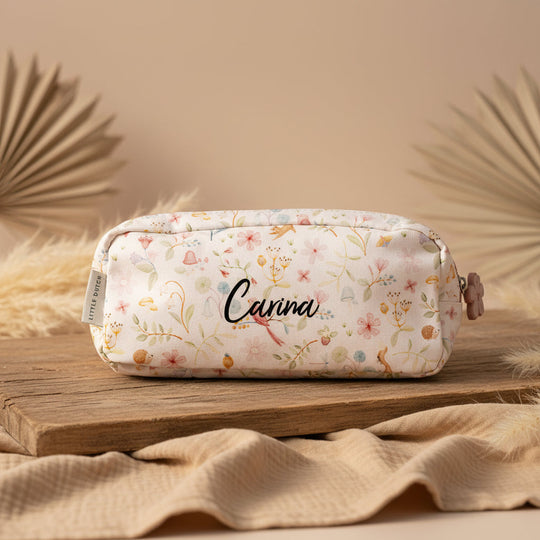
Prioritize personalization over function. A name makes the item personal, but does not change the dimensions or care. Also check the spelling and delivery information for personalized variants.
Conclusion: Plan the location first, then buy specifically
For a changing area without a changing table, a reliable routine counts more than a large set. A foldable mat is practical if you want to remain flexible. A padded pad is better suited to a permanent area. With a suitable basket and separate refill, the area remains tidy. Now check your changing area, the required space, and the care requirements – this will significantly narrow down the product selection.
Frequently asked questions about a changing area without a changing table
Do I absolutely need a changing table before the baby arrives?
No. You need a well-prepared changing area. The floor avoids the risk of falling from an elevated surface. You should test beforehand whether this position is suitable for your daily routine.
What is more sensible for a small apartment: a pad or a mat?
If the space needs to be clear after use, a foldable mat is often easier to store. A permanent area can better suit your routines with a padded pad. The key are the actual dimensions and your storage space.
Is a portable changing mat also sufficient at home?
It can be used for a suitable, supervised changing area. Check the intended use and care instructions of the specific model. The "for travel" label does not automatically answer whether it meets your requirements for space and comfort.
Is a changing pad cover waterproof?
This depends on the individual product. A fabric cover is not proof of moisture protection. Check the material description and manufacturer information; the cover must also fit the pad used.
How many storage baskets should I buy?
There is no fixed mandatory number. Start with an organized holder for immediate needs. Another basket is then useful if it solves a concrete problem, such as separate refills or frequent trips between rooms.
Can a wipe-clean mat go in the washing machine?
Not automatically. The Jollein Miffy and Twill Sand models are labeled for hand washing here; the Little Dutch Little Pink Flowers pad is wiped clean with a damp cloth and is not machine washable. The care label remains decisive.
What do I do if I forgot something while changing?
Do not leave the baby alone on an elevated surface to go get it. Take the baby with you or put them down in a safe place. Afterwards, add this to your routine so that everything is ready next time.
Sources and classification
The safety information is based on professional information. The interior design ideas and product classifications are editorial everyday aids and not individual medical advice.
Sources, product information, and availability checked on October 5, 2026. Please follow the current instructions for use and care labeling for all products.