




Which children's bathrobe is right? Size and material compared
Direct answer: The right children's bathrobe depends first on the size specification of the particular model, then on the material and use. Age sizes like "1–2 years" are straightforward if the child falls roughly within this range. Double sizes such as 74/80, 86/92, or 98/104 are better aligned with the current clothing size. For frequent bathing, absorbent cotton terry is practical; a cotton-blend fabric can also be suitable for everyday use. Freedom of movement, a well-fitting hood, and the manufacturer's care instructions are also important.
A children's bathrobe should be quick to slip over after a bath, shower, or trip to the swimming pool, fit comfortably, and remain easy to manage in everyday family life. However, the selection is not always obvious when shopping online: Some models are categorized by age, while others are categorized by clothing size. In addition, there are different materials, animal hoods, and the option for name personalization.
This buying guide therefore answers a clear question: Which children's bathrobe is right for my child? It helps you correctly interpret size specifications, understand material differences, and avoid typical wrong purchases.
The quick selection guide
| Requirement | What to look for | Suitable direction |
|---|---|---|
| Size as clear as possible | Current clothing size | Models in 74/80, 86/92, or 98/104 |
| Simple gift | Know the age beforehand for sure | Clearly stated size, e.g., 1–2 years |
| Frequent bathing and showering | Terry cloth, care label, drying | Cotton-rich bathrobe |
| Personalized gift | Check spelling and cancellation policy | Model with name personalization |
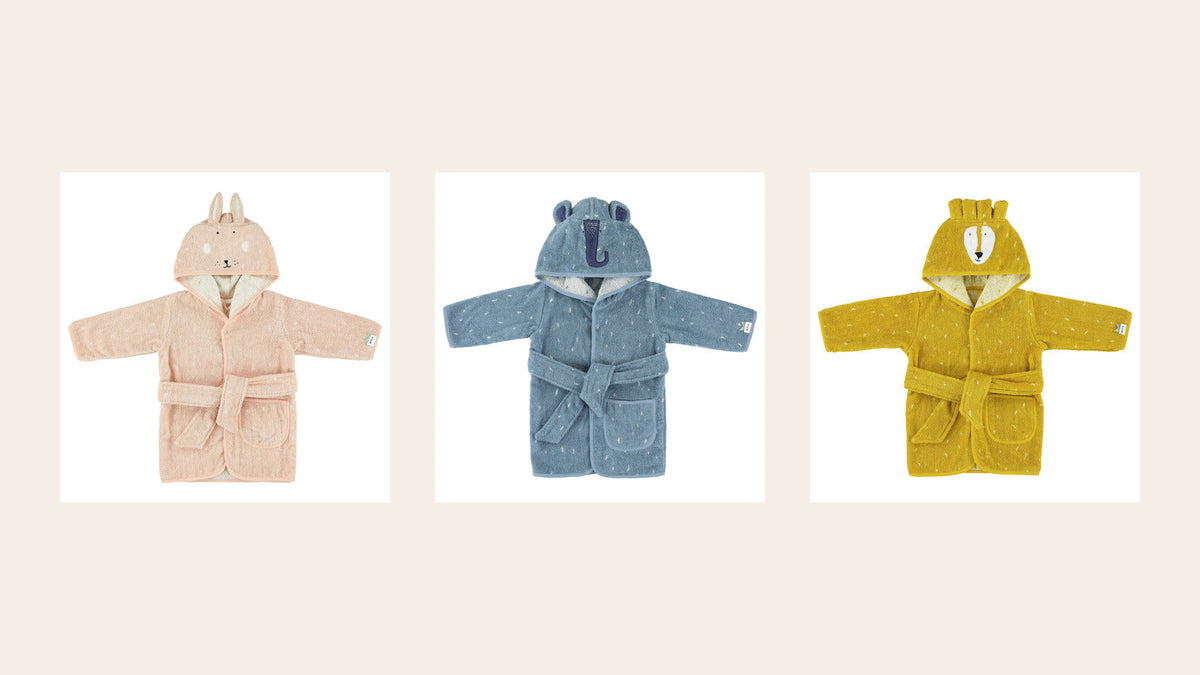
| Child loves animal motifs | Hood and motif that they will enjoy wearing | Trixie animal bathrobe |
What size should a children's bathrobe be?
The most reliable guide is the sizing logic of the respective product. If your child predominantly wears 86/92 in tops, a bathrobe in the same double size is usually the more sensible starting point than a general age estimate. For models with specifications such as "1–2 years," you should check whether the child falls roughly within this range in terms of age and size.
A bathrobe may fit comfortably over pajamas or underwear, but it should not be bought so large that the sleeves reach far beyond the hands or the hem gets in the way when walking. Ordering significantly larger "just in case" may sound economical, but it is rarely the best solution for a garment for wet feet and bathroom floors.
Age specification or clothing size?
Age specifications are easy to understand and are well suited for gifts if the age is known exactly. Clothing sizes are more helpful if parents can state the current clothing size. Both are orientation systems, not a guarantee of an identical fit for every child. Body type, growth, and cut differ.
Cotton, organic cotton, or blended fabric?
Among the bathrobes compared here, you will find cotton or organic cotton terry cloth as well as models with a cotton-polyester blend. Cotton-rich terry cloth is popular for its absorbent surface. A blended fabric can be easy to care for and shape-stable; however, how a particular model performs cannot be determined by a single fiber content alone. Workmanship, fabric weight, and care also play a role.
The fiber composition of textiles must be clearly stated in the EU. Percentage specifications on the label and product page are therefore a better basis for decision-making than advertising terms such as "cozy" or "soft." The EU also explains that the designation "100%" may only be used for a product made exclusively from one type of fiber. Regarding care: the sewn-in care label of the particular bathrobe takes precedence.
If you are torn between two materials, do not just ask yourself which material is theoretically "better." What is more important: How often will the bathrobe be washed? Is it allowed in the dryer according to the label? Does it dry sufficiently on a regular hook at your home? The German Environment Agency lists durability and shape stability after washing and drying as key quality aspects of sustainable textiles.
What features make sense in everyday use?
Hood
A hood keeps the head and neck covered after bathing. The key is that it does not constantly slip into the face. Animal ears or animal faces are not a functional advantage, but they can help children enjoy putting on the bathrobe themselves.
Tie belt
The belt should be easy to grasp and not drag on the floor when walking. Check after putting it on whether the ends are a practical length. For small children, tying should be left to an accompanying adult.
Personalization
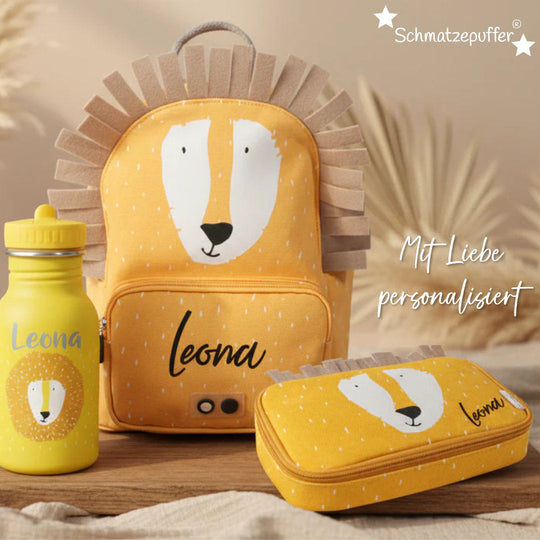
A name makes the bathrobe easy to identify as a gift or for daycare, swimming lessons, and family visits. Check the spelling particularly carefully before ordering. Personalized goods may also be treated differently under the law than standard goods; the information on the product page and the cancellation policy are decisive.
Six available children's bathrobes compared
All the following models were active, publicly accessible, and available in at least one variant at the time of editorial review. Sizes and stock may change; therefore, check the available variant again before purchasing.


Which model is right for which requirement?
- For as many size options as possible: Pure Soft Blue covers the three offered double sizes and was available in all sizes during the review.
- For a personalized gift: The Little Dutch models can be ordered with a name depending on the variant.
- For a clear age specification: The Trixie models shown are expressly designated for 1–2 years.
- For animal fans: Rabbit, elephant, and lion make the hood a recognizable part of the gift.
- For cotton without a stated synthetic fiber content: Focus on the models whose product page states 100% cotton or organic cotton.
Typical wrong purchases – and how to avoid them
- Buying by age only: Ask about the current clothing size for gifts if the model is offered in double sizes.
- Planning too much growth buffer: Very long sleeves and hems are impractical in the bathroom.
- Confusing material advertising with material specification: The fiber percentages are decisive, not just terms like "soft".
- Checking care only after purchase: Read the washing and drying instructions beforehand, especially if you regularly use a dryer.
- Sending personalization without checking: Check the name letter by letter; choose special characters and capitalization consciously.
- Letting the child handle the belt alone: For small children, adults should help with dressing and tying.
If you are looking for a quick solution directly after bathing the baby instead of a bathrobe, our comparison of hooded towels in 75 × 75 and 100 × 100 cm will help. For the first bathing attempts, you will also find a cautious guide in the post Baby's first bath.
Conclusion: First size, then material and design
The best children's bathrobe is not automatically the thickest or cutest model. It fits the current size, allows enough freedom of movement, and can be cared for in a way that suits your everyday life. Double sizes are helpful if the clothing size is known; age sizes simplify the selection with suitable age specifications. Then material, motif, and personalization decide.
Frequently asked questions about children's bathrobes
Which children's bathrobe size is right?
For double sizes, orient yourself to the currently worn top size. For age sizes, the child should fall roughly within the stated range. Always check the specifications of the particular model in addition.
Should you buy a children's bathrobe larger?
A small growth buffer can make sense, but not excessively long sleeves or a dragging hem. The bathrobe should fit comfortably without getting in the way when walking.
Is cotton or a blended fabric better?
Cotton terry cloth is absorbent and comfortable against the skin. Blended fabric can also be practical. Decide based on the exact fiber contents, care instructions, and your drying options.
Is organic cotton automatically easier to care for?
No. "Organic" describes the origin or production of the cotton, not automatically the washing temperature, dryer suitability, or shape stability. The care label is decisive for this.
From what age is a bathrobe sensible?
As soon as a suitably designated model is available and the child can safely get into it. For very small babies, a hooded towel is often easier to handle.
Is a personalized children's bathrobe worth it?
Especially as a gift or for swimming lessons and daycare, a name can make identification easier. Check the spelling and ordering instructions carefully.
How often should a children's bathrobe be washed?
This depends on use and soiling. Let it dry completely after each use and always follow the care labeling of the particular product for washing.
